Code has been run on Google Colab, thanks Google for providing computational resources
Contents
-
Natural Language Processing(自然语言处理)
-
-
IMDB(ENG)
-
CLUE Emotion Analysis Dataset (CHN)
-
-
-
SNLI(ENG)
-
微众银行智能客服(CHN)
-
蚂蚁金融语义相似度 (CHN)
-
-
Intent Detection and Slot Filling(意图检测与槽位填充)
- ATIS(ENG)
-
-
ElasticSearch
-
Sparse Retrieval
-
Dense Retrieval
-
-
-
- Large-scale Chinese Conversation Dataset (CHN)
-
Multi-turn Dialogue Rewriting(多轮对话改写)
- 20k 腾讯 AI 研发数据(CHN)
-
- Facebook's Hierarchical Task Oriented Dialog(ENG)
-
Multi-hop Question Answering(多跳问题回答)
- bAbI(ENG)
-
-
Topic Modelling
-
Explain Prediction
-
-
-
Knowledge Graph(知识图谱)
-
- Movielens 1M(English Data)
Text Classification
└── finch/tensorflow2/text_classification/imdb
	│
	├── data
	│   └── glove.840B.300d.txt          # pretrained embedding, download and put here
	│   └── make_data.ipynb              # step 1. make data and vocab: train.txt, test.txt, word.txt
	│   └── train.txt  		     # incomplete sample, format <label, text> separated by \t
	│   └── test.txt   		     # incomplete sample, format <label, text> separated by \t
	│   └── train_bt_part1.txt  	     # (back-translated) incomplete sample, format <label, text> separated by \t
	│
	├── vocab
	│   └── word.txt                     # incomplete sample, list of words in vocabulary
	│
	└── main
		└── sliced_rnn.ipynb         # step 2: train and evaluate model
		└── ...
-
Task: IMDB(English Data)
Training Data: 25000, Testing Data: 25000, Labels: 2-
<Notebook>: Make Data & Vocabulary
Back-Translation increases training data from 25000 to 50000 which is done by "english -> french -> english" translation -
Model: TF-IDF + Logistic Regression (Sklearn)
Logistic Regression Binary TF NGram Range Knowledge Dist Testing Accuracy <Notebook> False (1, 1) False 88.3% <Notebook> True (1, 1) False 88.8% <Notebook> True (1, 2) False 89.6% <Notebook> True (1, 2) True 90.7% -> PySpark Equivalent
-
Model: FastText, CNN and RNN
Code Model Testing Accuracy <Notebook> FastText (Unigram) 87.3% <Notebook> FastText (Bigram) 89.8% <Notebook> FastText (AutoTune) 90.1% <Notebook> TextCNN 91.8% <Notebook> Sliced RNN 92.6% -
Model: Large-scale Transformer
-
TensorFlow 2 + transformers
Code Model Batch Size Max Length Testing Accuracy <Notebook> BERT 32 128 92.6% <Notebook> BERT 16 200 93.3% <Notebook> BERT 12 256 93.8% <Notebook> BERT 8 300 94% <Notebook> RoBERTa 8 300 94.7%
-
-
└── finch/tensorflow2/text_classification/clue
	│
	├── data
	│   └── make_data.ipynb              # step 1. make data and vocab
	│   └── train.txt  		     # download from clue benchmark
	│   └── test.txt   		     # download from clue benchmark
	│
	├── vocab
	│   └── label.txt                    # list of emotion labels
	│
	└── main
		└── bert_finetune.ipynb      # step 2: train and evaluate model
		└── ...
-
Task: CLUE Emotion Analysis Dataset(Chinese Data)
Training Data: 31728, Testing Data: 3967, Labels: 7-
Model: TF-IDF + Linear Model
Logistic Regression Binary TF NGram Range Split By Testing Accuracy <Notebook> False (1, 1) Char 57.4% <Notebook> True (1, 1) Word 57.7% <Notebook> False (1, 2) Word 57.8% <Notebook> False (1, 1) Word 58.3% <Notebook> True (1, 2) Char 59.1% <Notebook> False (1, 2) Char 59.4% -
Model: Deep Model
Code Model Env Testing Accuracy <Notebook> BERT TF2 61.7% <Notebook> BERT + TAPT (<Notebook>) TF2 62.3%
-
Text Matching
└── finch/tensorflow2/text_matching/snli
	│
	├── data
	│   └── glove.840B.300d.txt       # pretrained embedding, download and put here
	│   └── download_data.ipynb       # step 1. run this to download snli dataset
	│   └── make_data.ipynb           # step 2. run this to generate train.txt, test.txt, word.txt
	│   └── train.txt  		  # incomplete sample, format <label, text1, text2> separated by \t
	│   └── test.txt   		  # incomplete sample, format <label, text1, text2> separated by \t
	│
	├── vocab
	│   └── word.txt                  # incomplete sample, list of words in vocabulary
	│
	└── main
		└── dam.ipynb      	  # step 3. train and evaluate model
		└── esim.ipynb      	  # step 3. train and evaluate model
		└── ......
-
Task: SNLI(English Data)
Training Data: 550152, Testing Data: 10000, Labels: 3Code Reference Env Testing Accuracy <Notebook> DAM TF2 85.3% <Notebook> Match Pyramid TF2 87.1% <Notebook> ESIM TF2 87.4% <Notebook> RE2 TF2 87.7% <Notebook> RE3 TF2 88.3% <Notebook> BERT TF2 90.4% <Notebook> RoBERTa TF2 91.1%
└── finch/tensorflow2/text_matching/chinese
	│
	├── data
	│   └── make_data.ipynb           # step 1. run this to generate char.txt and char.npy
	│   └── train.csv  		  # incomplete sample, format <text1, text2, label> separated by comma
	│   └── test.csv   		  # incomplete sample, format <text1, text2, label> separated by comma
	│
	├── vocab
	│   └── cc.zh.300.vec             # pretrained embedding, download and put here
	│   └── char.txt                  # incomplete sample, list of chinese characters
	│   └── char.npy                  # saved pretrained embedding matrix for this task
	│
	└── main
		└── pyramid.ipynb      	  # step 2. train and evaluate model
		└── esim.ipynb      	  # step 2. train and evaluate model
		└── ......
-
Task: 微众银行智能客服(Chinese Data)
Training Data: 100000, Testing Data: 10000, Labels: 2, Balanced-
Model (can be compared to this benchmark since the dataset is the same)
Code Reference Env Split by Testing Accuracy <Notebook> RE2 TF2 Word 82.5% <Notebook> ESIM TF2 Char 82.5% <Notebook> Match Pyramid TF2 Char 82.7% <Notebook> RE2 TF2 Char 83.8% <Notebook> BERT TF2 Char 83.8% <Notebook> BERT-wwm TF1 + bert4keras Char 84.75%
└── finch/tensorflow2/text_matching/ant
	│
	├── data
	│   └── make_data.ipynb           # step 1. run this to generate char.txt and char.npy
	│   └── train.json           	  # incomplete sample, format <text1, text2, label> separated by comma
	│   └── dev.json   		  # incomplete sample, format <text1, text2, label> separated by comma
	│
	├── vocab
	│   └── cc.zh.300.vec             # pretrained embedding, download and put here
	│   └── char.txt                  # incomplete sample, list of chinese characters
	│   └── char.npy                  # saved pretrained embedding matrix for this task
	│
	└── main
		└── pyramid.ipynb      	  # step 2. train and evaluate model
		└── bert.ipynb      	  # step 2. train and evaluate model
		└── ......
-
Task: 蚂蚁金融语义相似度(Chinese Data)
Training Data: 34334, Testing Data: 4316, Labels: 2, ImbalancedCode Reference Env Split by Testing Accuracy <Notebook> RE2 TF2 Char 66.5% <Notebook> Match Pyramid TF2 Char 69.0% <Notebook> Match Pyramid + Joint Training TF2 Char 70.3% <Notebook> BERT TF2 Char 73.8% <Notebook> BERT + TAPT (<Notebook>) TF2 Char 74.3% -
Joint training
-
set data_1 = 微众银行智能客服 (size: 100000)
-
set data_2 = 蚂蚁金融语义相似度 (size: 34334)
-
joint training (size: 100000 + 34334 = 134334)
BERT train by data_1 train by data_2 joint train joint train + TAPT Code <Notebook> <Notebook> <Notebook> <Notebook> data_1 accuracy 83.8% - 84.4% 85.0% data_2 accuracy - 73.8% 74.0% 74.9% -
Intent Detection and Slot Filling
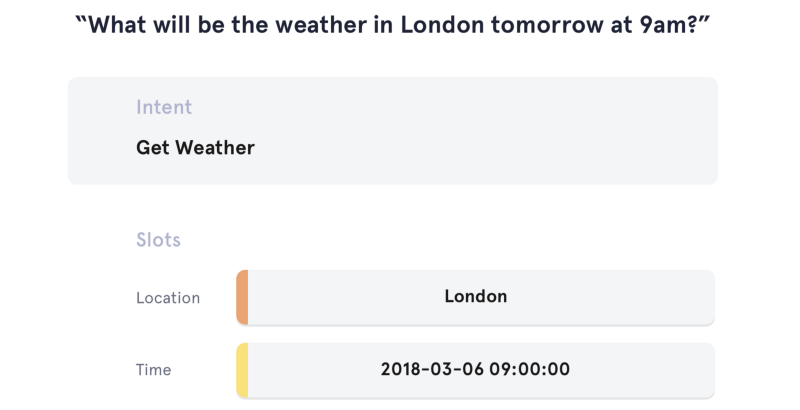
└── finch/tensorflow2/spoken_language_understanding/atis
	│
	├── data
	│   └── glove.840B.300d.txt           # pretrained embedding, download and put here
	│   └── make_data.ipynb               # step 1. run this to generate vocab: word.txt, intent.txt, slot.txt
	│   └── atis.train.w-intent.iob       # incomplete sample, format <text, slot, intent>
	│   └── atis.test.w-intent.iob        # incomplete sample, format <text, slot, intent>
	│
	├── vocab
	│   └── word.txt                      # list of words in vocabulary
	│   └── intent.txt                    # list of intents in vocabulary
	│   └── slot.txt                      # list of slots in vocabulary
	│
	└── main
		└── bigru_clr.ipynb               # step 2. train and evaluate model
		└── ...
-
Task: ATIS(English Data)
Training Data: 4978, Testing Data: 893Code Model Helper Env Intent Accuracy Slot Micro-F1 <Notebook> CRF - crfsuite - 92.6% <Notebook> Bi-GRU - TF2 97.4% 95.4% <Notebook> Bi-GRU + CRF TF2 97.2% 95.8% <Notebook> Transformer - TF2 96.5% 95.5% <Notebook> Transformer + Time Weighting TF2 97.2% 95.6% <Notebook> Transformer + Time Mixing TF2 97.5% 95.8% <Notebook> Bi-GRU + ELMO TF1 97.5% 96.1% <Notebook> Bi-GRU + ELMO + CRF TF1 97.3% 96.3%
Retrieval Dialog
-
Task: Build a chatbot answering fundamental questions
Code Engine Encoder Vector Type Unit Test Accuracy <Notebook> Elastic Search Default (TF-IDF) Sparse 80% <Notebook> Elastic Search Default (TF-IDF) + Segmentation Sparse 90% <Notebook> Elastic Search Bert Dense 80% <Notebook> Elastic Search Universal Sentence Encoder Dense 100%
Semantic Parsing
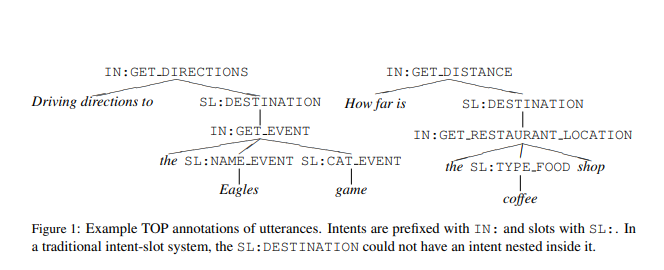
└── finch/tensorflow2/semantic_parsing/tree_slu
	│
	├── data
	│   └── glove.840B.300d.txt     	# pretrained embedding, download and put here
	│   └── make_data.ipynb           	# step 1. run this to generate vocab: word.txt, intent.txt, slot.txt
	│   └── train.tsv   		  	# incomplete sample, format <text, tokenized_text, tree>
	│   └── test.tsv    		  	# incomplete sample, format <text, tokenized_text, tree>
	│
	├── vocab
	│   └── source.txt                	# list of words in vocabulary for source (of seq2seq)
	│   └── target.txt                	# list of words in vocabulary for target (of seq2seq)
	│
	└── main
		└── lstm_seq2seq_tf_addons.ipynb           # step 2. train and evaluate model
		└── ......
-
Task: Semantic Parsing for Task Oriented Dialog(English Data)
Training Data: 31279, Testing Data: 9042Code Reference Env Testing Exact Match <Notebook> GRU Seq2Seq TF2 74.1% <Notebook> LSTM Seq2Seq TF2 74.1% <Notebook> GRU Pointer-Generator TF2 80.4% <Notebook> GRU Pointer-Generator + Char Embedding TF2 80.7% The Exact Match result is higher than original paper
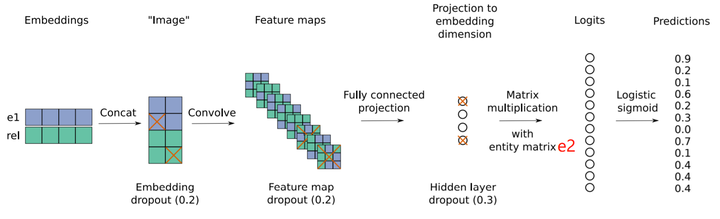
Knowledge Graph Completion
└── finch/tensorflow2/knowledge_graph_completion/wn18
	│
	├── data
	│   └── download_data.ipynb       	# step 1. run this to download wn18 dataset
	│   └── make_data.ipynb           	# step 2. run this to generate vocabulary: entity.txt, relation.txt
	│   └── wn18  		          	# wn18 folder (will be auto created by download_data.ipynb)
	│   	└── train.txt  		  	# incomplete sample, format <entity1, relation, entity2> separated by \t
	│   	└── valid.txt  		  	# incomplete sample, format <entity1, relation, entity2> separated by \t
	│   	└── test.txt   		  	# incomplete sample, format <entity1, relation, entity2> separated by \t
	│
	├── vocab
	│   └── entity.txt                  	# incomplete sample, list of entities in vocabulary
	│   └── relation.txt                	# incomplete sample, list of relations in vocabulary
	│
	└── main
		└── distmult_1-N.ipynb    	# step 3. train and evaluate model
		└── ...
-
Task: WN18
Training Data: 141442, Testing Data: 5000-
We use the idea of multi-label classification to accelerate evaluation
Code Reference Env MRR [email protected] [email protected] [email protected] <Notebook> DistMult TF2 0.797 0.938 0.902 0.688 <Notebook> TuckER TF2 0.885 0.939 0.909 0.853 <Notebook> ComplEx TF2 0.938 0.958 0.948 0.925
Knowledge Base Question Answering

-
Rule-based System(基于规则的系统)
For example, we want to answer the following questions with car knowledge:
 	What is BMW?
     	I want to know about the BMW
     	Please introduce the BMW to me
     	How is the BMW?
     	How is the BMW compared to the Benz?
Multi-hop Question Answering

└── finch/tensorflow1/question_answering/babi
	│
	├── data
	│   └── make_data.ipynb           		# step 1. run this to generate vocabulary: word.txt
	│   └── qa5_three-arg-relations_train.txt       # one complete example of babi dataset
	│   └── qa5_three-arg-relations_test.txt	# one complete example of babi dataset
	│
	├── vocab
	│   └── word.txt                  		# complete list of words in vocabulary
	│
	└── main
		└── dmn_train.ipynb
		└── dmn_serve.ipynb
		└── attn_gru_cell.py
-
Task: bAbI(English Data)
Text Visualization
-
Topic Modelling
-
Model: TF-IDF + LDA
-
Data: IMDB Movie Reviews
-
-
Explain Prediction
-
Model: SHAP
-
Data: IMDB Movie Reviews
-
Recommender System

└── finch/tensorflow1/recommender/movielens
	│
	├── data
	│   └── make_data.ipynb           		# run this to generate vocabulary
	│
	├── vocab
	│   └── user_job.txt
	│   └── user_id.txt
	│   └── user_gender.txt
	│   └── user_age.txt
	│   └── movie_types.txt
	│   └── movie_title.txt
	│   └── movie_id.txt
	│
	└── main
		└── dnn_softmax.ipynb
		└── ......
-
Task: Movielens 1M(English Data)
Training Data: 900228, Testing Data: 99981, Users: 6000, Movies: 4000, Rating: 1-5-
Model: Fusion
Code Scoring LR Decay Env Testing MAE <Notebook> Sigmoid (Continuous) Exponential TF1 0.663 <Notebook> Sigmoid (Continuous) Cyclical TF1 0.661 <Notebook> Softmax (Discrete) Exponential TF1 0.633 <Notebook> Softmax (Discrete) Cyclical TF1 0.628 The MAE results seem better than the all the results here and all the results here
Multi-turn Dialogue Rewriting

└── finch/tensorflow1/multi_turn_rewrite/chinese/
	│
	├── data
	│   └── make_data.ipynb         # run this to generate vocab, split train & test data, make pretrained embedding
	│   └── corpus.txt		# original data downloaded from external
	│   └── train_pos.txt		# processed positive training data after {make_data.ipynb}
	│   └── train_neg.txt		# processed negative training data after {make_data.ipynb}
	│   └── test_pos.txt		# processed positive testing data after {make_data.ipynb}
	│   └── test_neg.txt		# processed negative testing data after {make_data.ipynb}
	│
	├── vocab
	│   └── cc.zh.300.vec		# fastText pretrained embedding downloaded from external
	│   └── char.npy		# chinese characters and their embedding values (300 dim)
	│   └── char.txt		# list of chinese characters used in this project
	│
	└── main
		└── baseline_lstm_train.ipynb
		└── baseline_lstm_predict.ipynb
		└── ...
-
Task: 20k 腾讯 AI 研发数据(Chinese Data)
data split as: training data (positive): 18986, testing data (positive): 1008 Training data = 2 * 18986 because of 1:1 Negative Sampling-
<Notebook>: Make Data & Vocabulary & Pretrained Embedding
There are six incorrect data and we have deleted them -
Model (results can be compared to here with the same dataset)
Code Model Env Exact Match BLEU-1 BLEU-2 BLEU-4 <Notebook> LSTM Seq2Seq + Dynamic Memory TF1 56.2% 94.6 89.1 78.5 <Notebook> GRU Seq2Seq + Dynamic Memory TF1 56.2% 95.0 89.5 78.9 <Notebook> GRU Pointer TF1 59.2% 93.2 87.7 77.2 <Notebook> GRU Pointer + Multi-Attention TF1 60.2% 94.2 88.7 78.3 -
Deployment: first export the model
Inference Code Environment <Notebook> Python <Notebook> Java
Generative Dialog
└── finch/tensorflow1/free_chat/chinese_lccc
	│
	├── data
	│   └── LCCC-base.json           	# raw data downloaded from external
	│   └── LCCC-base_test.json         # raw data downloaded from external
	│   └── make_data.ipynb           	# step 1. run this to generate vocab {char.txt} and data {train.txt & test.txt}
	│   └── train.txt           		# processed text file generated by {make_data.ipynb}
	│   └── test.txt           			# processed text file generated by {make_data.ipynb}
	│
	├── vocab
	│   └── char.txt                	# list of chars in vocabulary for chinese
	│   └── cc.zh.300.vec			# fastText pretrained embedding downloaded from external
	│   └── char.npy			# chinese characters and their embedding values (300 dim)
	│
	└── main
		└── lstm_seq2seq_train.ipynb    # step 2. train and evaluate model
		└── lstm_seq2seq_infer.ipynb    # step 4. model inference
		└── ...
-
Task: Large-scale Chinese Conversation Dataset
Training Data: 5000000 (sampled due to small memory), Testing Data: 19008-
Data
-
Model
Code Model Env Test Case Perplexity <Notebook> Transformer Encoder + LSTM Generator TF1 <Notebook> 42.465 <Notebook> LSTM Encoder + LSTM Generator TF1 <Notebook> 41.250 <Notebook> LSTM Encoder + LSTM Pointer-Generator TF1 <Notebook> 36.525 -
If you want to deploy model in Java production
└── FreeChatInference │ ├── data │ └── transformer_export/ │ └── char.txt │ └── libtensorflow-1.14.0.jar │ └── tensorflow_jni.dll │ └── src └── ModelInference.java-
If you don't know the input and output node names in Java, you can display the node names:
!saved_model_cli show --dir ../model/xxx/1587959473/ --tag_set serve --signature_def serving_default
-
Large Pre-trained GPT
Test Case Model Env Author <Notebook> GPT LCCC base TF1 + bert4keras Tsinghua University <Notebook> GPT LCCC large TF1 + bert4keras Tsinghua University <Notebook> NEZHA LM TF1 + bert4keras Jianlin Su -
Diverse Response Comparsion
问题 / 模型回复 Our RNN GPT base GPT large Nezha Q: 你好 A: 你好 A: 你好 A: 你好,你好,我是大好人。 A: 您好 Q: 早上好 A: 早上好 A: 早上好,好久不见 A: 早上好! A: 早啊早啊 Q: 晚上好 A: 晚上好 A: 你好 A: 好久不见 A: 晚上好! Q: 再见 A: 再见 A: 不见 A: 你是不是不爱我了 A: 我要走了 Q: 好久不见 A: 好久不见 A: 是呀,好久不见。 A: 是啊,好久不见。 A: 是啊,最近怎么样啊 Q: 想死你了 A: 我也是 A: 我也想你, A: 我不信 A: 哈哈哈哈哈 Q: 谢谢你 A: 不客气 A: 不用谢 A: 不用 A: 不谢不谢, Q: 爱你 A: 爱你 A: 你是爱我 A: 我也爱你, A: 我也爱你,你最美 Q: 你叫什么名字 A: 你猜 A: 我也想知道 A: 叫你 A: 你是不是想说我的名字太俗了 Q: 你几岁了 A: 问女孩子年龄可不是绅士所为哦 ~ A: 你猜 A: 你猜 A: 我不知道 Q: 现在几点了 A: 11点 A: 你说呢? A: 十二点 A: 我也不知道啊 Q: 今天天气怎么样 A: 下雨了 A: 今天很冷,但是我还是觉得很冷 A: 很好 A: 不错 Q: 我们现在在哪里 A: 在这里 A: 我在这里等你呢 A: 我不知道你在说什么 A: 在我们宿舍楼下。。。 Q: 你能给我讲个笑话吗 A: 不能 A: 讲个笑话 A: 讲给谁听 A: 不能 Q: 你是男孩还是女孩呀 A: 我是萌妹纸 A: 你猜 A: 你猜呀 A: 我是萌妹纸 Q: 你会几种语言呀 A: 你猜 A: 不会 A: 你猜呀~ A: 只会说一句 Q: 你能陪我玩吗 A: 可以啊 A: 可以 A: 我可以啊 A: 你猜 Q: 说话可以大声一点吗 A: 可以 A: 可以的 A: 不要 A: 我不 Q: 天气真好 A: 是的 A: 是啊! A: 天气好是因为有你 A: 是啊。 Q: 天气太糟糕了 A: 是啊 A: 是啊 A: 是啊 A: 是的 Q: 下雨了 A: 是的 A: 你们那边也下雨了 A: 是呀 A: 我也是 Q: 雨好大 A: 今天下雨了 A: 是啊 A: 是的,好大雨 A: 对呀,我们还穿短袖 Q: 我讨厌艳阳天 A: 我也讨厌艳阳天 A: 我也是。 A: 我喜欢阴天 A: 我喜欢 Q: 好晒啊 A: 是啊 A: 是啊 A: 是啊!! A: 是啊,不是很热的 Q: 今天好冷 A: 多穿点衣服 A: 你们都不来 A: 你那儿也冷了 A: 是啊。 Q: 今天好热 A: 今天热死了 A: 热死我了 A: 对啊 A: 对啊,我都热疯 Q: 风好大 A: 是啊 A: 风太大了。。。 A: 你不是在上课嘛 A: 嗯嗯嗯,风好大,冷 Q: 雾太大了看不清路 A: 雾太大了 A: 哈哈,你这是在逗我笑 A: 我也看不清 A: 你是不是傻啊 Q: 打雷了好可怕 A: 可怕 A: 我们这边也是,我们这边下雨了,我们这边也没有下雨。 A: 是啊 A: 我们这边下雨了 Q: 下雪了诶 A: 下雪了? A: 是滴! A: 嗯嗯嗯!!好大的雪!! A: 下了一天了 Q: 好烦啊 A: 我也好烦 A: 我也是 A: 我好烦 A: 我也是 Q: 好开心 A: 开心就好 A: 你是不是想我了 A: 是呀 A: 哈哈哈,我也是! Q: 太激动了 A: 激动什么 A: 我也激动 A: 哈哈,还是不要了 A: 哈哈 Q: 我好难过 A: 怎么了? A: 我也是,我们都是 A: 不要难过,我陪你 A: 你怎么难过 Q: 我想哭 A: 抱抱 A: 抱紧你 A: 我不想哭!你不要想太多! A: 哭吧哭吧,我陪你哭 Q: 太好笑了 A: 笑死我了 A: 你也笑了? A: 我也觉得 A: 哈哈 Q: 我好伤心 A: 怎么了 A: 你伤心什么 A: 我也是 A: 你是不是想笑死我!!下次再给你拍 Q: 心好痛 A: 抱抱 A: 你心痛什么 A: 心碎一地了。 A: 怎么了 Q: 好累啊 A: 加油 A: 你不会还是一个人在寝室吧 A: 好好休息 A: 累了就睡觉 Q: 我好疲惫 A: 我也是 A: 我也差不多。。 A: 我好困 A: 你不是一直都很疲惫么 Q: 我爱你 A: 我也爱你 A: 我也是 A: 我们都爱你 A: 爱我就来见面 Q: 我讨厌你 A: 我也讨厌你 A: 你不是一直很喜欢我 A: 不是我的 A: 我也讨厌你 Q: 你真是太棒啦 A: 谢谢 A: 你最棒 A: 你也棒棒哒 A: 谢谢! Q: 你好厉害啊 A: 哈哈 A: 是不是 A: 你也不差呀 A: 你也可以的 Q: 吓死我了 A: 哈哈 A: 我都不敢出门了 A: 哈哈哈哈哈!!! A: 哈哈哈哈哈笑死我了 Q: 我想回家 A: 我也想回家 A: 我也想!! A: 想家的时候回来,想家的时候离开。 A: 回来吧,家真的好啊! Q: 我想爸妈了 A: 我也想爸妈 A: 哈哈 A: 我也想 A: 想我吗 Q: 不知道小孩在家有没有听话 A: 我也不知道 A: 没有 A: 听话的话肯定是会听话的。 A: 我也是听不懂啊 Q: 想回家撸猫 A: 我也想回家 A: 你也想啊? A: 我们这也有一个 A: 回呀回呀
-

 32 Nov 13, 2022
 3.5k Jan 03, 2023
 587 Dec 20, 2022
 32 Dec 18, 2022
 141 Dec 30, 2022
 834 Jan 09, 2023
 3.2k Dec 31, 2022
 89 Nov 10, 2022
 1 Nov 19, 2021
 37 Dec 25, 2022
 4 Nov 25, 2022
 49 Dec 17, 2022
 5.4k Jan 03, 2023
 1.2k Dec 17, 2022
 1 Jan 01, 2022
 3 Aug 08, 2021
 214 Nov 24, 2022
 21 Aug 06, 2022
 2 Apr 20, 2022
 45 Oct 29, 2022