A PyTorch implementation of "Predict then Propagate: Graph Neural Networks meet Personalized PageRank" (ICLR 2019).

Overview

APPNP

Arxiv codebeat badge repo sizebenedekrozemberczki

A PyTorch implementation of Predict then Propagate: Graph Neural Networks meet Personalized PageRank (ICLR 2019).


Abstract

Neural message passing algorithms for semi-supervised classification on graphs have recently achieved great success. However, these methods only consider nodes that are a few propagation steps away and the size of this utilized neighborhood cannot be easily extended. In this paper, we use the relationship between graph convolutional networks (GCN) and PageRank to derive an improved propagation scheme based on personalized PageRank. We utilize this propagation procedure to construct personalized propagation of neural predictions (PPNP) and its approximation, APPNP. Our model's training time is on par or faster and its number of parameters on par or lower than previous models. It leverages a large, adjustable neighborhood for classification and can be combined with any neural network. We show that this model outperforms several recently proposed methods for semi-supervised classification on multiple graphs in the most thorough study done so far for GCN-like models.

A PyTorch and Tensorflow implementation is awailable [here.].

This repository provides a PyTorch implementation of PPNP and APPNP as described in the paper:

Predict then Propagate: Graph Neural Networks meet Personalized PageRank. Johannes Klicpera, Aleksandar Bojchevski, Stephan Günnemann. ICLR, 2019. [Paper]

Requirements

The codebase is implemented in Python 3.5.2. package versions used for development are just below.

networkx          2.4
tqdm              4.28.1
numpy             1.15.4
pandas            0.23.4
texttable         1.5.0
scipy             1.1.0
argparse          1.1.0
torch             1.1.0
torch-scatter     1.4.0
torch-sparse      0.4.3
torch-cluster     1.4.5
torch-geometric   1.3.2
torchvision       0.3.0

Datasets

The code takes the **edge list** of the graph in a csv file. Every row indicates an edge between two nodes separated by a comma. The first row is a header. Nodes should be indexed starting with 0. A sample graph for `Cora` is included in the `input/` directory. In addition to the edgelist there is a JSON file with the sparse features and a csv with the target variable.

The **feature matrix** is a sparse binary one it is stored as a json. Nodes are keys of the json and feature indices are the values. For each node feature column ids are stored as elements of a list. The feature matrix is structured as:

{ 0: [0, 1, 38, 1968, 2000, 52727],
  1: [10000, 20, 3],
  2: [],
  ...
  n: [2018, 10000]}

The target vector is a csv with two columns and headers, the first contains the node identifiers the second the targets. This csv is sorted by node identifiers and the target column contains the class meberships indexed from zero.

NODE ID Target
0 3
1 1
2 0
3 1
... ...
n 3

Options

Training an APPNP/PPNP model is handled by the src/main.py script which provides the following command line arguments.

Input and output options

  --edge-path       STR    Edge list csv.         Default is `input/cora_edges.csv`.
  --features-path   STR    Features json.         Default is `input/cora_features.json`.
  --target-path     STR    Target classes csv.    Default is `input/cora_target.csv`.

Model options

  --seed              INT     Random seed.                   Defailt is 42.
  --model             STR     Model exact or approximate.    Default is `exact`.
  --iterations        INT     APP iterations.                Default is 10.
  --alpha             FLOAT   Teleport parameter.            Default is 0.1
  --epochs            INT     Number of training epochs.     Default is 2000.
  --early-stopping    INT     Early stopping rounds.         Default is 5.
  --training-size     INT     Training set size.             Default is 1500.
  --test-size         INT     Test set size.                 Default is 500.
  --learning-rate     FLOAT   Adam learning rate.            Default is 0.01
  --dropout           FLOAT   Dropout rate value.            Default is 0.5
  --lambd             FLOAT   Rgularization parameter.       Default is 0.005.
  --layers            LST     Layer sizes in first layers.   Default is [64, 64]. 

Examples

The following commands learn a neural network and score on the test set. Training a model on the default dataset.

python src/main.py

Training a PPNP model for a 100 epochs.

python src/main.py --epochs 100

Training an APPNP model.

python src/main.py --model approximate

Increasing the learning rate and the dropout.

python src/main.py --learning-rate 0.1 --dropout 0.9

License


You might also like...
A PyTorch implementation of SlowFast based on ICCV 2019 paper
A PyTorch implementation of SlowFast based on ICCV 2019 paper "SlowFast Networks for Video Recognition"

SlowFast A PyTorch implementation of SlowFast based on ICCV 2019 paper SlowFast Networks for Video Recognition. Requirements Anaconda PyTorch conda in

Unofficial PyTorch Implementation of AHDRNet (CVPR 2019)

AHDRNet-PyTorch This is the PyTorch implementation of Attention-guided Network for Ghost-free High Dynamic Range Imaging (CVPR 2019). The official cod

Implementation of Geometric Vector Perceptron, a simple circuit for 3d rotation equivariance for learning over large biomolecules, in Pytorch. Idea proposed and accepted at ICLR 2021

Geometric Vector Perceptron Implementation of Geometric Vector Perceptron, a simple circuit with 3d rotation equivariance for learning over large biom

Pytorch implementation of BRECQ, ICLR 2021

BRECQ Pytorch implementation of BRECQ, ICLR 2021 @inproceedings{ li&gong2021brecq, title={BRECQ: Pushing the Limit of Post-Training Quantization by Bl

Implementation of 'lightweight' GAN, proposed in ICLR 2021, in Pytorch. High resolution image generations that can be trained within a day or two

512x512 flowers after 12 hours of training, 1 gpu 256x256 flowers after 12 hours of training, 1 gpu Pizza 'Lightweight' GAN Implementation of 'lightwe

This repo contains the pytorch implementation for Dynamic Concept Learner (accepted by ICLR 2021).

DCL-PyTorch Pytorch implementation for the Dynamic Concept Learner (DCL). More details can be found at the project page. Framework Grounding Physical

An implementation demo of the ICLR 2021 paper Neural Attention Distillation: Erasing Backdoor Triggers from Deep Neural Networks in PyTorch.

Neural Attention Distillation This is an implementation demo of the ICLR 2021 paper Neural Attention Distillation: Erasing Backdoor Triggers from Deep

Official PyTorch implementation of
Official PyTorch implementation of "Rapid Neural Architecture Search by Learning to Generate Graphs from Datasets" (ICLR 2021)

Rapid Neural Architecture Search by Learning to Generate Graphs from Datasets This is the official PyTorch implementation for the paper Rapid Neural A

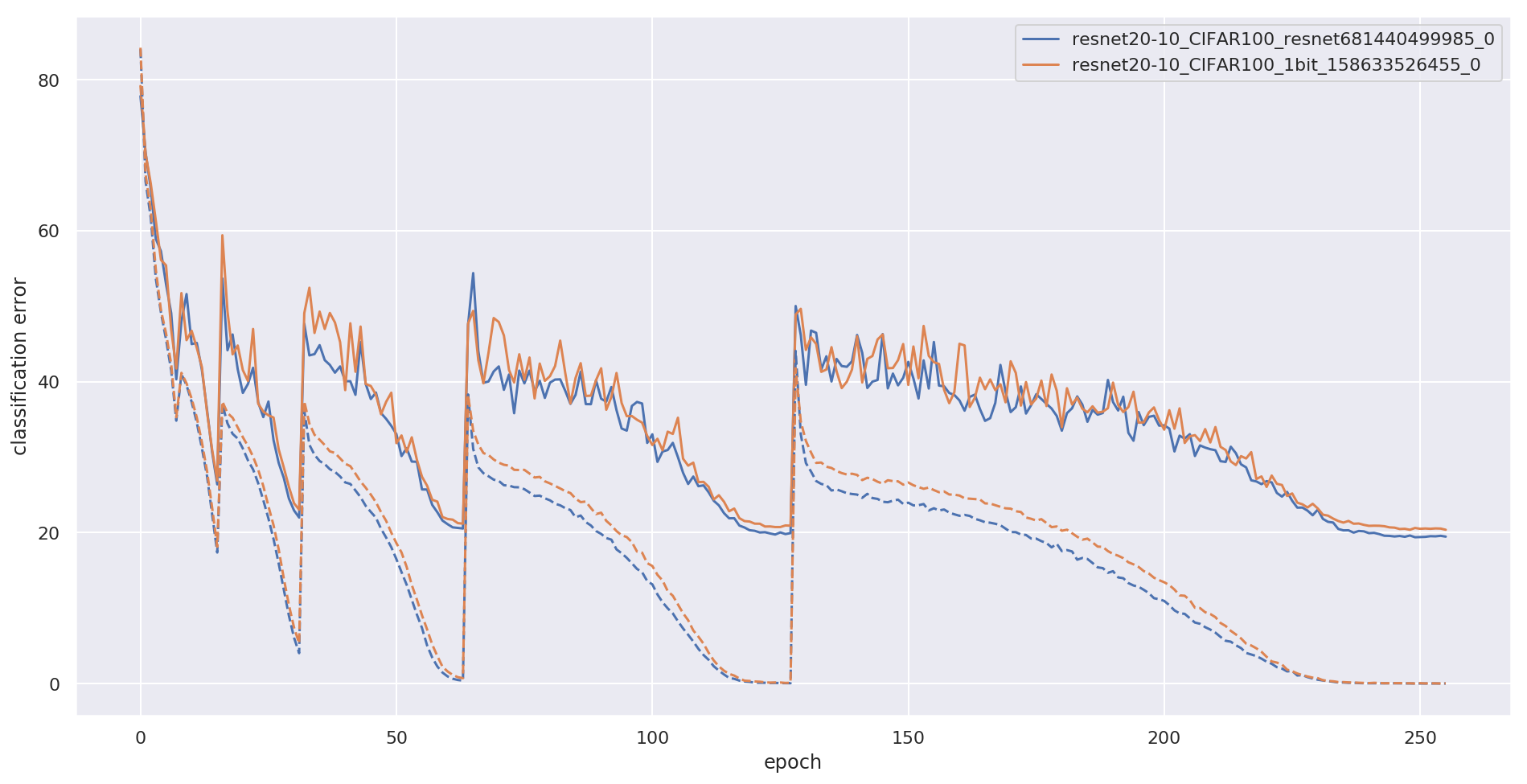
PyTorch implementation of Wide Residual Networks with 1-bit weights by McDonnell (ICLR 2018)

1-bit Wide ResNet PyTorch implementation of training 1-bit Wide ResNets from this paper: Training wide residual networks for deployment using a single

Comments
  • About training

    About training

    Hi, thanks for you sharing your nice work. I have a question when I run your code. Maybe I misunderstand the main point of this paper. It seems that when you train you model, you do not apply the graph information, which means your network is a normal fully connected network. After training, you apply PageRank to the output of the network when evaluate the model. Is my understanding correct?

    opened by Jianjin123 4
Releases(v_00001)
Owner
Benedek Rozemberczki
Machine Learning Engineer at AstraZeneca | PhD from The University of Edinburgh.
Benedek Rozemberczki
The Deep Learning with Julia book, using Flux.jl.

Deep Learning with Julia DL with Julia is a book about how to do various deep learning tasks using the Julia programming language and specifically the

Logan Kilpatrick 67 Dec 25, 2022
InsTrim: Lightweight Instrumentation for Coverage-guided Fuzzing

InsTrim The paper: InsTrim: Lightweight Instrumentation for Coverage-guided Fuzzing Build Prerequisite llvm-8.0-dev clang-8.0 cmake = 3.2 Make git cl

75 Dec 23, 2022
Pytorch implementation of "Training a 85.4% Top-1 Accuracy Vision Transformer with 56M Parameters on ImageNet"

Token Labeling: Training an 85.4% Top-1 Accuracy Vision Transformer with 56M Parameters on ImageNet (arxiv) This is a Pytorch implementation of our te

蒋子航 383 Dec 27, 2022
Python library for science observations from the James Webb Space Telescope

JWST Calibration Pipeline JWST requires Python 3.7 or above and a C compiler for dependencies. Linux and MacOS platforms are tested and supported. Win

Space Telescope Science Institute 386 Dec 30, 2022
YouRefIt: Embodied Reference Understanding with Language and Gesture

YouRefIt: Embodied Reference Understanding with Language and Gesture YouRefIt: Embodied Reference Understanding with Language and Gesture by Yixin Che

16 Jul 11, 2022
Official PyTorch implementation of Joint Object Detection and Multi-Object Tracking with Graph Neural Networks

This is the official PyTorch implementation of our paper: "Joint Object Detection and Multi-Object Tracking with Graph Neural Networks". Our project website and video demos are here.

Richard Wang 443 Dec 06, 2022
Neon-erc20-example - Example of creating SPL token and wrapping it with ERC20 interface in Neon EVM

Example of wrapping SPL token by ERC2-20 interface in Neon Requirements Install

7 Mar 28, 2022
Implementation of 🦩 Flamingo, state-of-the-art few-shot visual question answering attention net out of Deepmind, in Pytorch

🦩 Flamingo - Pytorch Implementation of Flamingo, state-of-the-art few-shot visual question answering attention net, in Pytorch. It will include the p

Phil Wang 630 Dec 28, 2022
一个目标检测的通用框架(不需要cuda编译),支持Yolo全系列(v2~v5)、EfficientDet、RetinaNet、Cascade-RCNN等SOTA网络。

一个目标检测的通用框架(不需要cuda编译),支持Yolo全系列(v2~v5)、EfficientDet、RetinaNet、Cascade-RCNN等SOTA网络。

Haoyu Xu 203 Jan 03, 2023
Benchmarks for Object Detection in Aerial Images

Benchmarks for Object Detection in Aerial Images

Jian Ding 691 Dec 30, 2022
[ICCV21] Official implementation of the "Social NCE: Contrastive Learning of Socially-aware Motion Representations" in PyTorch.

Social-NCE + CrowdNav Website | Paper | Video | Social NCE + Trajectron | Social NCE + STGCNN This is an official implementation for Social NCE: Contr

VITA lab at EPFL 125 Dec 23, 2022
An open source implementation of CLIP.

OpenCLIP Welcome to an open source implementation of OpenAI's CLIP (Contrastive Language-Image Pre-training). The goal of this repository is to enable

2.7k Dec 31, 2022
Pansharpening by convolutional neural networks in the full resolution framework

Z-PNN: Zoom Pansharpening Neural Network Pansharpening by convolutional neural networks in the full resolution framework is a deep learning method for

20 Nov 24, 2022
DeepFaceEditing: Deep Face Generation and Editing with Disentangled Geometry and Appearance Control

DeepFaceEditing: Deep Face Generation and Editing with Disentangled Geometry and Appearance Control One version of our system is implemented using the

260 Nov 28, 2022
RANZCR-CLiP 7th Place Solution

RANZCR-CLiP 7th Place Solution This repository is WIP. (18 Mar 2021) Installation git clone https://github.com/analokmaus/kaggle-ranzcr-clip-public.gi

Hiroshechka Y 21 Oct 22, 2022
Collections for the lasted paper about multi-view clustering methods (papers, codes)

Multi-View Clustering Papers Collections for the lasted paper about multi-view clustering methods (papers, codes). There also exists some repositories

Andrew Guan 10 Sep 20, 2022
A deep learning framework for historical document image analysis

DIVA-DAF Description A deep learning framework for historical document image analysis. How to run Install dependencies # clone project git clone https

9 Aug 04, 2022
LIAO Shuiying 6 Dec 01, 2022
TensorFlow implementation of AlexNet and its training and testing on ImageNet ILSVRC 2012 dataset

AlexNet training on ImageNet LSVRC 2012 This repository contains an implementation of AlexNet convolutional neural network and its training and testin

Matteo Dunnhofer 161 Nov 25, 2022
机器学习、深度学习、自然语言处理等人工智能基础知识总结。

说明 机器学习、深度学习、自然语言处理基础知识总结。 目前主要参考李航老师的《统计学习方法》一书,也有一些内容例如XGBoost、聚类、深度学习相关内容、NLP相关内容等是书中未提及的。

Peter 445 Dec 12, 2022