Repo for my Tensorflow/Keras CV experiments. Mostly revolving around the Danbooru20xx dataset

Overview

SW-CV-ModelZoo

Repo for my Tensorflow/Keras CV experiments. Mostly revolving around the Danbooru20xx dataset


Framework: TF/Keras 2.7

Training SQLite DB built using fire-egg's tools: https://github.com/fire-eggs/Danbooru2019

Currently training on Danbooru2021, 512px SFW subset (sans the rating:q images that had been included in the 2022-01-21 release of the dataset)

Reference:

Anonymous, The Danbooru Community, & Gwern Branwen; “Danbooru2021: A Large-Scale Crowdsourced and Tagged Anime Illustration Dataset”, 2022-01-21. Web. Accessed 2022-01-28 https://www.gwern.net/Danbooru2021


Journal

06/02/2022: great news crew! TRC allowed me to use a bunch of TPUs!

To make better use of this amount of compute I had to overhaul a number of components, so a bunch of things are likely to have fallen to bitrot in the process. I can only guarantee NFNet can work pretty much as before with the right arguments.
NFResNet changes should have left it retrocompatible with the previous version.
ResNet has been streamlined to be mostly in line with the Bag-of-Tricks paper (arXiv:1812.01187) with the exception of the stem. It is not compatible with the previous version of the code.

The training labels have been included in the 2021_0000_0899 folder for convenience.
The list of files used for training is going to be uploaded as a GitHub Release.

Now for some numbers:
compared to my previous best run, the one that resulted in NFNetL1V1-100-0.57141:

  • I'm using 1.86x the amount of images: 2.8M vs 1.5M
  • I'm training bigger models: 61M vs 45M params
  • ... in less time: 232 vs 700 hours of processor time
  • don't get me started on actual wall clock time
  • with a few amenities thrown in: ECA for channel attention, SiLU activation

And it's all thanks to the folks at TRC, so shout out to them!

I currently have a few runs in progress across a couple of dimensions:

  • effect of model size with NFNet L0/L1/L2, with SiLU and ECA for all three of them
  • effect of activation function with NFNet L0, with SiLU/HSwish/ReLU, no ECA

Once the experiments are over, the plan is to select the network definitions that lay on the Pareto curve between throughput and F1 score and release the trained weights.

One last thing.
I'd like to call your attention to the tools/cleanlab_stuff.py script.
It reads two files: one with the binarized labels from the database, the other with the predicted probabilities.
It then uses the cleanlab package to estimate whether if an image in a set could be missing a given label. At the end it stores its conclusions in a json file.
This file could, potentially, be used in some tool to assist human intervention to add the missing tags.

You might also like...
Human head pose estimation using Keras over TensorFlow.

RealHePoNet: a robust single-stage ConvNet for head pose estimation in the wild.

Graph Neural Networks with Keras and Tensorflow 2.

Welcome to Spektral Spektral is a Python library for graph deep learning, based on the Keras API and TensorFlow 2. The main goal of this project is to

QKeras: a quantization deep learning library for Tensorflow Keras

QKeras github.com/google/qkeras QKeras 0.8 highlights: Automatic quantization using QKeras; Stochastic behavior (including stochastic rouding) is disa

Hyperparameter Optimization for TensorFlow, Keras and PyTorch

Hyperparameter Optimization for Keras Talos • Key Features • Examples • Install • Support • Docs • Issues • License • Download Talos radically changes

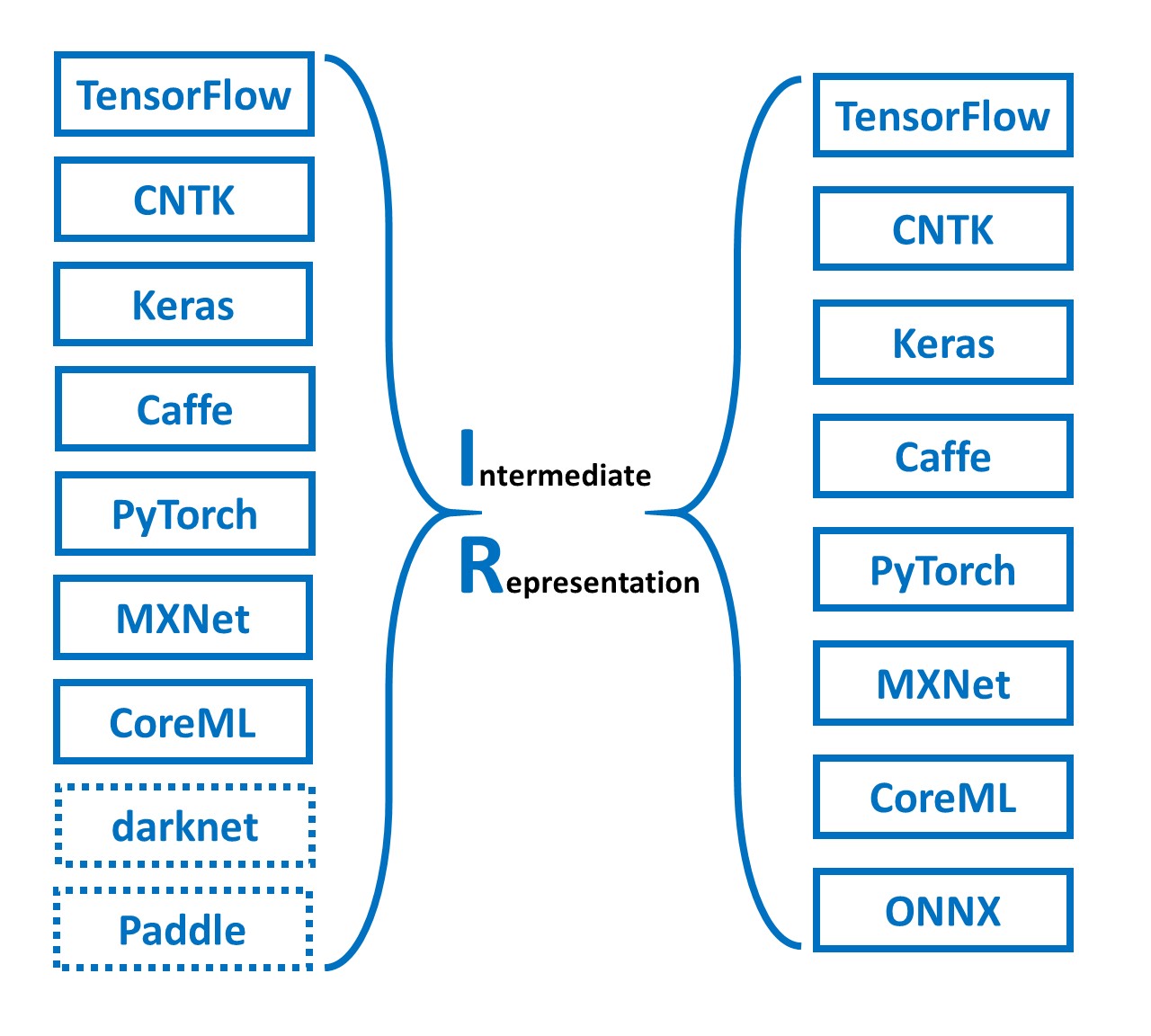
MMdnn is a set of tools to help users inter-operate among different deep learning frameworks. E.g. model conversion and visualization. Convert models between Caffe, Keras, MXNet, Tensorflow, CNTK, PyTorch Onnx and CoreML.

MMdnn MMdnn is a comprehensive and cross-framework tool to convert, visualize and diagnose deep learning (DL) models. The "MM" stands for model manage

Deep GPs built on top of TensorFlow/Keras and GPflow

GPflux Documentation | Tutorials | API reference | Slack What does GPflux do? GPflux is a toolbox dedicated to Deep Gaussian processes (DGP), the hier

tf2onnx - Convert TensorFlow, Keras and Tflite models to ONNX.

tf2onnx converts TensorFlow (tf-1.x or tf-2.x), tf.keras and tflite models to ONNX via command line or python api.

Build tensorflow keras model pipelines in a single line of code. Created by Ram Seshadri. Collaborators welcome. Permission granted upon request.

deep_autoviml Build keras pipelines and models in a single line of code! Table of Contents Motivation How it works Technology Install Usage API Image

Advanced Deep Learning with TensorFlow 2 and Keras (Updated for 2nd Edition)

Advanced Deep Learning with TensorFlow 2 and Keras (Updated for 2nd Edition)

Releases(models_db2021_5500_2022_10_21)
  • models_db2021_5500_2022_10_21(Oct 21, 2022)

    ConvNext B, ViT B16
    Trained on Danbooru2021 512px SFW subset, modulos 0000-0899
    top 5500 tags (2021_0000_0899_5500/selected_tags.csv)
    alpha to white
    padding to make the image square is white
    channel order is BGR, input is 0...255, scaled to -1...1 within the model

    | run_name | definition_name | params_human | image_size | thres | F1 | |:---------------------------------|:------------------|:---------------|-------------:|--------:|-------:| | ConvNextBV1_09_25_2022_05h13m55s | B | 93.2M | 448 | 0.3673 | 0.6941 | | ViTB16_09_25_2022_04h53m38s | B16 | 90.5M | 448 | 0.3663 | 0.6918 |

    Source code(tar.gz)
    Source code(zip)
    ConvNextBV1_09_25_2022_05h13m55s.7z(322.58 MB)
    ViTB16_09_25_2022_04h53m38s.7z(312.96 MB)
  • convnexts_db2021_2022_03_22(Mar 22, 2022)

    ConvNext, T/S/B
    Trained on Danbooru2021 512px SFW subset, modulos 0000-0899
    alpha to white
    padding to make the image square is white
    channel order is BGR, input is 0...255, scaled to -1...1 within the model

    | run_name | definition_name | params_human | image_size | thres | F1 | |:---------------------------------|:------------------|:---------------|-------------:|--------:|-------:| | ConvNextBV1_03_10_2022_21h41m23s | B | 90.01M | 448 | 0.3372 | 0.6892 | | ConvNextSV1_03_11_2022_17h49m56s | S | 51.28M | 384 | 0.3301 | 0.6798 | | ConvNextTV1_03_05_2022_15h56m42s | T | 29.65M | 320 | 0.3259 | 0.6595 |

    Source code(tar.gz)
    Source code(zip)
    ConvNextBV1_03_10_2022_21h41m23s.7z(311.29 MB)
    ConvNextSV1_03_11_2022_17h49m56s.7z(177.36 MB)
    ConvNextTV1_03_05_2022_15h56m42s.7z(102.96 MB)
  • nfnets_db2021_2022_03_04(Mar 4, 2022)

    NFNet, L0/L1/L2 (based on timm Lx model definitions) Trained on Danbooru2021 512px SFW subset, modulos 0000-0899 alpha to white padding to make the image square is white channel order is BGR, input is 0...255, scaled to -1...1 within the model

    | run_name | definition_name | params_human | image_size | thres | F1 | |:---------------------------------|:------------------|:---------------|-------------:|--------:|-------:| | NFNetL2V1_02_20_2022_10h27m08s | L2 | 60.96M | 448 | 0.3231 | 0.6785 | | NFNetL1V1_02_17_2022_20h18m38s | L1 | 45.65M | 384 | 0.3259 | 0.6691 | | NFNetL0V1_02_10_2022_17h50m14s | L0 | 27.32M | 320 | 0.3190 | 0.6509 |

    Source code(tar.gz)
    Source code(zip)
    NFNetL0V1_02_10_2022_17h50m14s.7z(94.98 MB)
    NFNetL1V1_02_17_2022_20h18m38s.7z(157.97 MB)
    NFNetL2V1_02_20_2022_10h27m08s.7z(210.49 MB)
  • nfnet_tpu_training(Feb 6, 2022)

  • NFNetL1V1-100-0.57141(Dec 31, 2021)

    • NFNet, L1 (based on timm Lx model definitions), 100 epochs, F1 @ 0.4 at the end of the 100th epoch was 0.57141
    • Trained on Danbooru2020 512px SFW subset, modulos 0000-0599
    • 320px per side
    • alpha to white
    • padding to make the image square is white
    • channel order is BGR, scaled to 0-1
    • mixup alpha = 0.2 during epochs 76-100
    • analyze_metrics on Danbooru2020 original set, modulos 0984-0999: {'thres': 0.3485, 'F1': 0.6133, 'F2': 0.6133, 'MCC': 0.6094, 'A': 0.9923, 'R': 0.6133, 'P': 0.6133}
    • analyze_metrics on image IDs 4970000-5000000: {'thres': 0.3148, 'F1': 0.5942, 'F2': 0.5941, 'MCC': 0.5892, 'A': 0.9901, 'R': 0.5940, 'P': 0.5943}
    Source code(tar.gz)
    Source code(zip)
    NFNetL1V1-100-0.57141.7z(158.09 MB)
Implementation of Self-supervised Graph-level Representation Learning with Local and Global Structure (ICML 2021).

Self-supervised Graph-level Representation Learning with Local and Global Structure Introduction This project is an implementation of ``Self-supervise

MilaGraph 50 Dec 09, 2022
Training Certifiably Robust Neural Networks with Efficient Local Lipschitz Bounds (Local-Lip)

Training Certifiably Robust Neural Networks with Efficient Local Lipschitz Bounds (Local-Lip) Introduction TL;DR: We propose an efficient and trainabl

17 Dec 01, 2022
Back to the Feature: Learning Robust Camera Localization from Pixels to Pose (CVPR 2021)

Back to the Feature with PixLoc We introduce PixLoc, a neural network for end-to-end learning of camera localization from an image and a 3D model via

Computer Vision and Geometry Lab 610 Jan 05, 2023
CVPR 2021: "Generating Diverse Structure for Image Inpainting With Hierarchical VQ-VAE"

Diverse Structure Inpainting ArXiv | Papar | Supplementary Material | BibTex This repository is for the CVPR 2021 paper, "Generating Diverse Structure

152 Nov 04, 2022
Build Graph Nets in Tensorflow

Graph Nets library Graph Nets is DeepMind's library for building graph networks in Tensorflow and Sonnet. Contact DeepMind 5.2k Jan 05, 2023

MaRS - a recursive filtering framework that allows for truly modular multi-sensor integration

The Modular and Robust State-Estimation Framework, or short, MaRS, is a recursive filtering framework that allows for truly modular multi-sensor integration

Control of Networked Systems - University of Klagenfurt 143 Dec 29, 2022
Reinforcement learning library(framework) designed for PyTorch, implements DQN, DDPG, A2C, PPO, SAC, MADDPG, A3C, APEX, IMPALA ...

Automatic, Readable, Reusable, Extendable Machin is a reinforcement library designed for pytorch. Build status Platform Status Linux Windows Supported

Iffi 348 Dec 24, 2022
Deep Implicit Moving Least-Squares Functions for 3D Reconstruction

DeepMLS: Deep Implicit Moving Least-Squares Functions for 3D Reconstruction This repository contains the implementation of the paper: Deep Implicit Mo

103 Dec 22, 2022
Official Pytorch implementation of the paper "MotionCLIP: Exposing Human Motion Generation to CLIP Space"

MotionCLIP Official Pytorch implementation of the paper "MotionCLIP: Exposing Human Motion Generation to CLIP Space". Please visit our webpage for mor

Guy Tevet 173 Dec 26, 2022
Official Pytorch Implementation of Unsupervised Image Denoising with Frequency Domain Knowledge

Unsupervised Image Denoising with Frequency Domain Knowledge (BMVC 2021 Oral) : Official Project Page This repository provides the official PyTorch im

Donggon Jang 12 Sep 26, 2022
Unsupervised Image Generation with Infinite Generative Adversarial Networks

Unsupervised Image Generation with Infinite Generative Adversarial Networks Here is the implementation of MICGANs using DCGAN architecture on MNIST da

16 Dec 24, 2021
KoCLIP: Korean port of OpenAI CLIP, in Flax

KoCLIP This repository contains code for KoCLIP, a Korean port of OpenAI's CLIP. This project was conducted as part of Hugging Face's Flax/JAX communi

Jake Tae 100 Jan 02, 2023
FairyTailor: Multimodal Generative Framework for Storytelling

FairyTailor: Multimodal Generative Framework for Storytelling

Eden Bens 172 Dec 30, 2022
Implementation of CVAE. Trained CVAE on faces from UTKFace Dataset to produce synthetic faces with a given degree of happiness/smileyness.

Conditional Smiles! (SmileCVAE) About Implementation of AE, VAE and CVAE. Trained CVAE on faces from UTKFace Dataset. Using an encoding of the Smile-s

Raúl Ortega 3 Jan 09, 2022
Transfer Learning Shootout for PyTorch's model zoo (torchvision)

pytorch-retraining Transfer Learning shootout for PyTorch's model zoo (torchvision). Load any pretrained model with custom final layer (num_classes) f

Alexander Hirner 169 Jun 29, 2022
Code for ViTAS_Vision Transformer Architecture Search

Vision Transformer Architecture Search This repository open source the code for ViTAS: Vision Transformer Architecture Search. ViTAS aims to search fo

46 Dec 17, 2022
This repository is an unoffical PyTorch implementation of Medical segmentation in 3D and 2D.

Pytorch Medical Segmentation Read Chinese Introduction:Here! Recent Updates 2021.1.8 The train and test codes are released. 2021.2.6 A bug in dice was

EasyCV-Ellis 618 Dec 27, 2022
An introduction to satellite image analysis using Python + OpenCV and JavaScript + Google Earth Engine

A Gentle Introduction to Satellite Image Processing Welcome to this introductory course on Satellite Image Analysis! Satellite imagery has become a pr

Edward Oughton 32 Jan 03, 2023
[AAAI-2022] Official implementations of MCL: Mutual Contrastive Learning for Visual Representation Learning

Mutual Contrastive Learning for Visual Representation Learning This project provides source code for our Mutual Contrastive Learning for Visual Repres

winycg 48 Jan 02, 2023
The code for paper "Contrastive Spatio-Temporal Pretext Learning for Self-supervised Video Representation" which is accepted by AAAI 2022

Contrastive Spatio Temporal Pretext Learning for Self-supervised Video Representation (AAAI 2022) The code for paper "Contrastive Spatio-Temporal Pret

8 Jun 30, 2022